Designing a Voice and Gesture Interface for Television

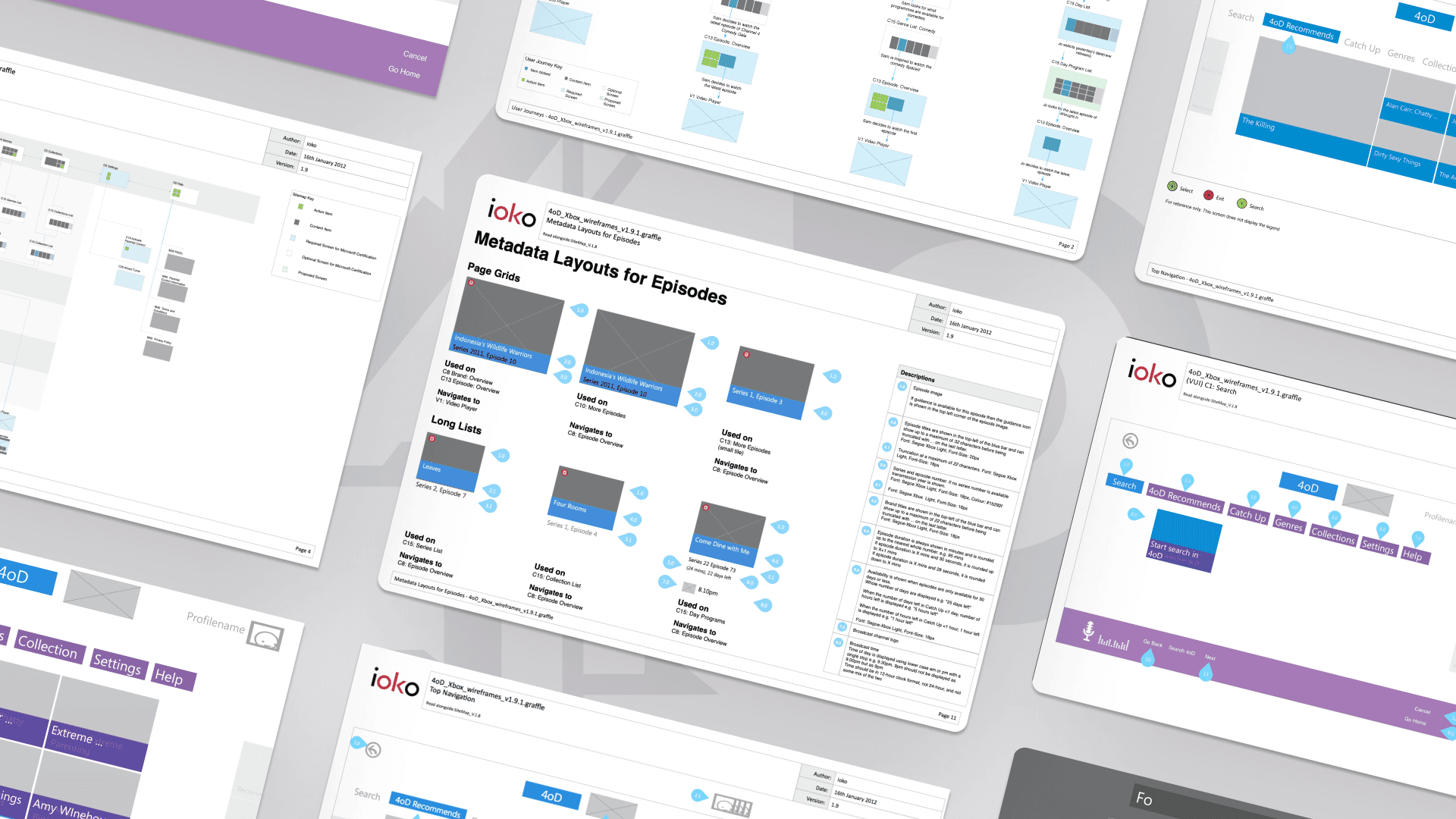
In 2012, digital convergence transformed game consoles into primary media hubs. The challenge was transitioning the Channel 4 VOD experience (4oD) to the Xbox 360 platform, specifically leveraging Microsoft’s Kinect sensor and its Natural User Interface (NUI).
Problem
Standard VOD interfaces designed for PCs or remote controls were poorly suited for the "lean-back" living room environment. Technical constraints, such as Kinect’s limited sensor resolution and the need for high-accuracy gesture tracking, created friction in content discovery. The product required a navigation system that was intuitive via voice and motion without sacrificing the depth of the 4oD archive.
Context
Channel 4 aimed to be a market leader in the OTT space by becoming the first broadcaster to launch a comprehensive VOD service on Xbox. The project required strict adherence to Microsoft Certification standards while maintaining the brand's editorial identity.
My Role
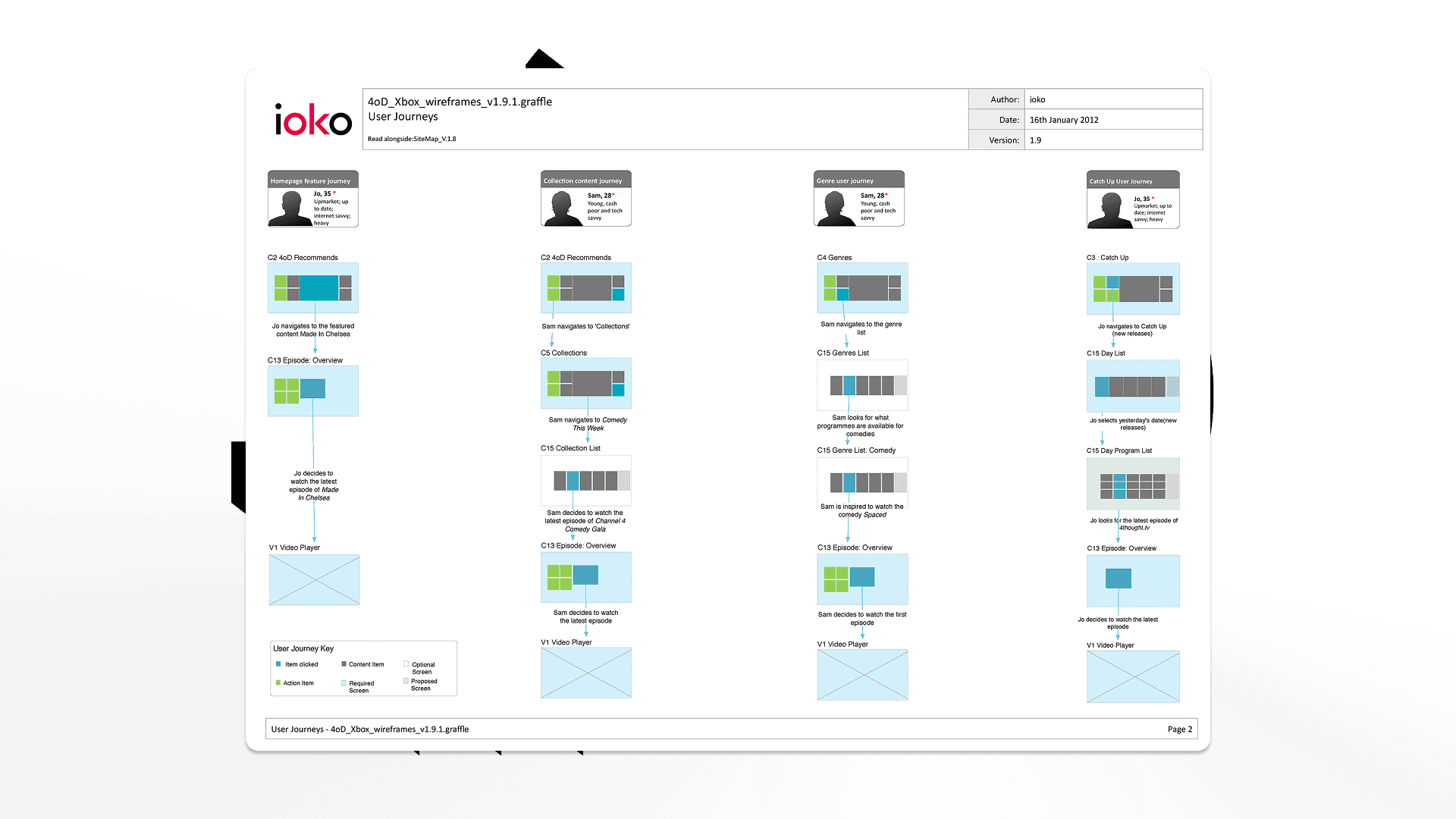
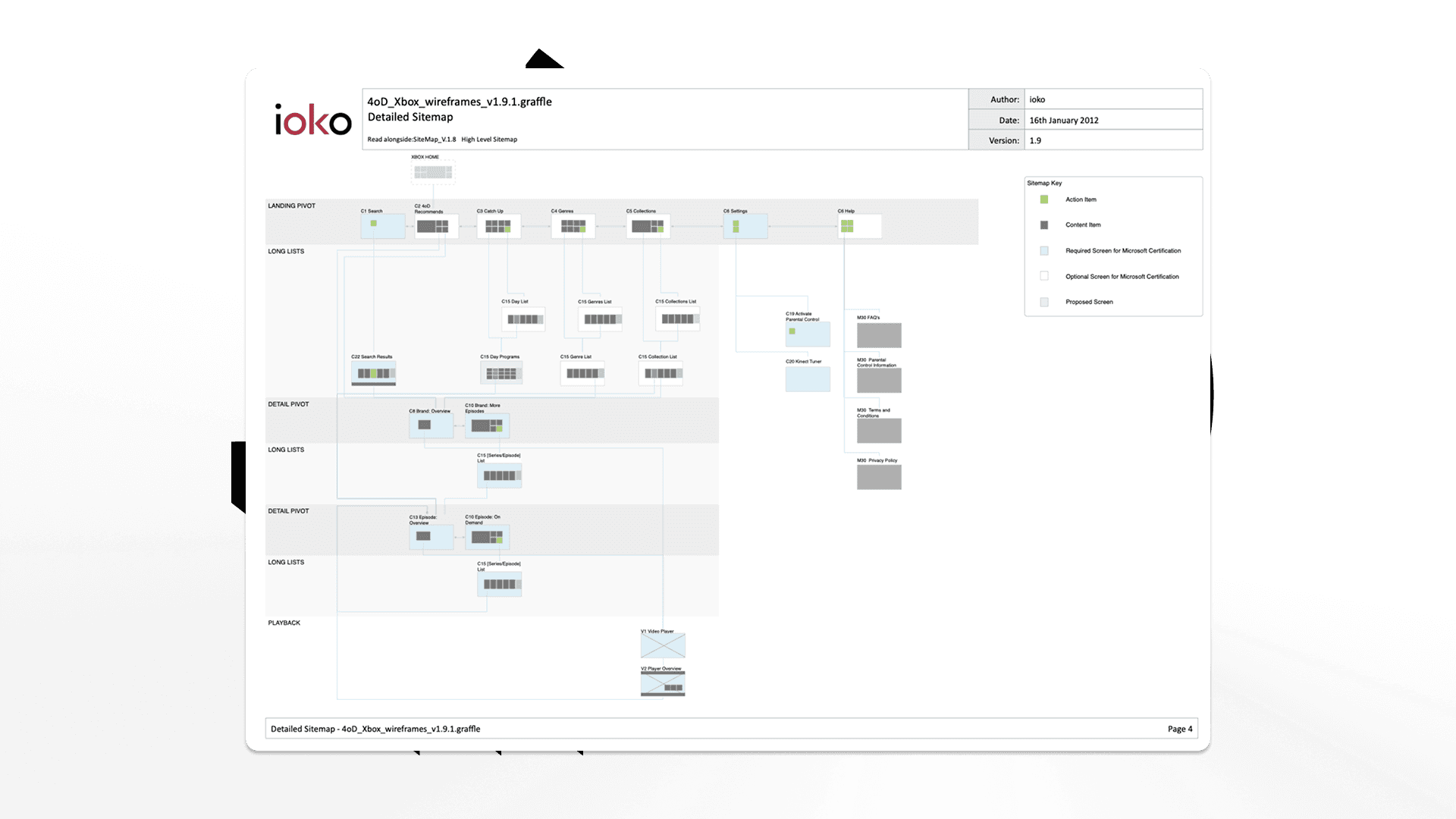
As part of ioko, I contributed from pitch through to delivery. As the Lead UX designer I led the definition of the application’s information architecture, detailed sitemaps, and core user journeys. Established the structural framework through iterative wireframing to align editorial requirements with technical console constraints. Managed the design of all Required and Optional Certification screens to ensure a seamless path to launch
Process
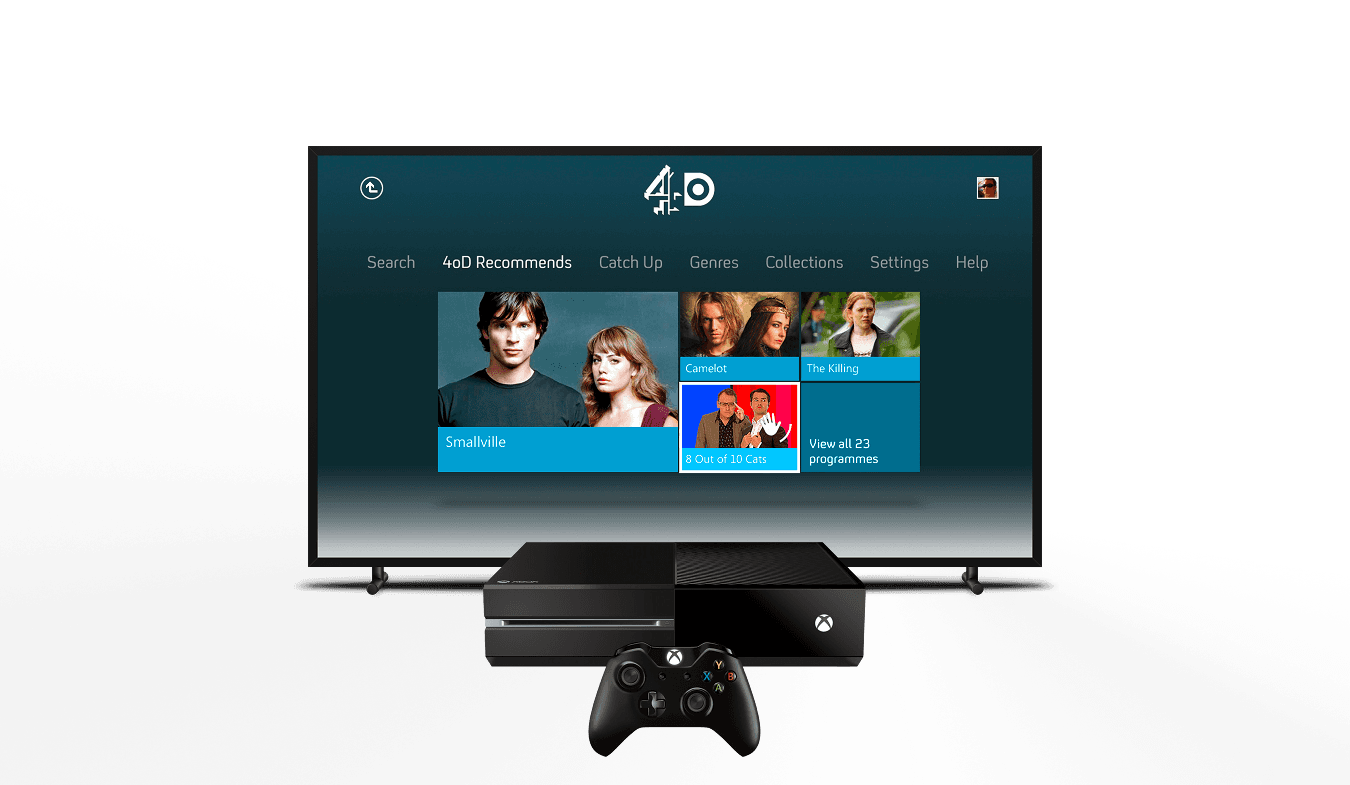
The design process focused on multi-modal interaction parity, ensuring every action was executable via voice, gesture, or controller. We shifted the content strategy from automated popularity lists to a curated "4oD Recommends" system to better surface high-quality programming. Documentation was central to the process, mapping complex logic for authentication, Xbox LIVE Gold upsells, and cross-platform profile switching.
Key Design Decisions
VUI Framework: Established the "See it, Say it" voice interface logic, allowing users to navigate the "Landing Pivot" by speaking the names of visible tiles or genres.
Contextual Playback: Defined a playback overlay with a 3-second no-interaction timeout, automatically returning users to full-screen video to preserve the viewing experience.
Systemic Metadata Rules: Standardized metadata layouts, including strict character truncation rules (e.g., 37 characters for brand titles) and specific date formatting to ensure visual consistency across the "Metro" tiled UI.
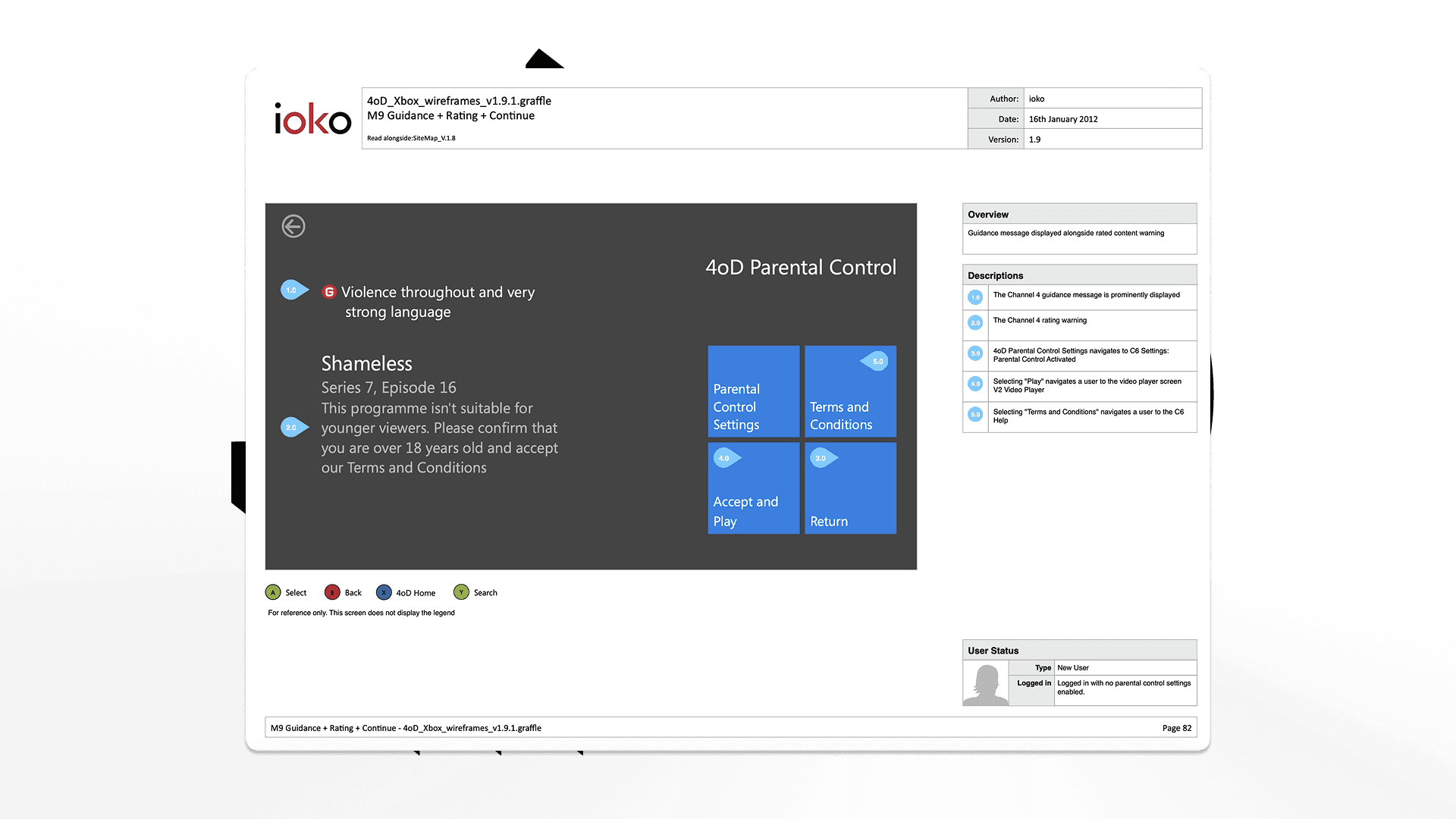
Regulatory Compliance: Designed a custom 4oD PIN system for parental controls that functioned independently of the Xbox console PIN, ensuring compliance with broadcast safety standards.
Parental Controls
Established an autonomous security architecture to align the 4oD platform with broadcast safety standards, operating as a dedicated logic layer independent of native console settings. Led the definition of a three-phase enforcement framework, integrating mandatory age verification, tiered content restriction (16+ or 18+), and conditional guidance interstitials to manage regulatory compliance. To maintain interaction parity, I engineered a controller-optimized PIN system utilizing a unique four-button sequence of triggers and bumpers, ensuring secure content discovery within the lean-back environment
Outcome
The final product was a high-performance VOD system that integrated 30-day catch-up and archive browsing into a single NUI experience. It featured a robust search function and a tiered parental control flow that satisfied both user safety and legal requirements
Impact
Market Leadership: Channel 4 became the first broadcaster globally to launch a full-scale VOD service on the Xbox platform.
Industry Recognition: The project was awarded the IBC 2012 Innovation Award for its pioneering implementation of gesture and voice-controlled content discovery.
Product Evolution: The established design patterns and information architecture served as the foundation for the 4oD application's subsequent migration to the Xbox One ecosystem
Award